sea urchin skeleton specimen
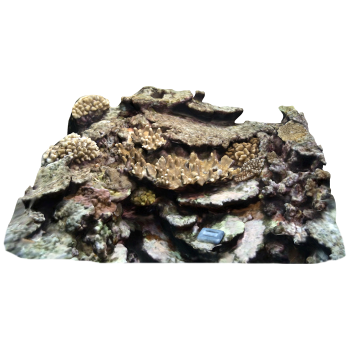
mastoid staghorn coral
The papillomatous staghorn coral is a typical reef-building coral of the family Staghorn Corals (Acroporidae) in the order Stony Corals (Scleractinia), a new species (or revised species) officially described in 2014 by the Russian taxonomist Yuri Latypov. The scientific name "papillare" is derived from the Latin "papilla" (papillae), which directly refers to the most prominent morphological feature of the species-the dense papillae on the surface of bones or polyps.
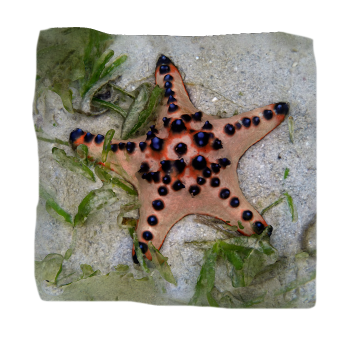
crown of thorns starfish
The crown-of-thorns starfish is a well-known top predator of coral reefs in the Asteroidea class (starfish). Its scientific name is now mostly classified as Acanthaster planci (often translated as "crown-of-thorns starfish" or "coral starfish" in Chinese). This kind of starfish is called "the nightmare of coral reefs" because its large-scale outbreak can lead to the death of large-scale bleaching coral reefs, is a key regulator of tropical coral reef ecosystems
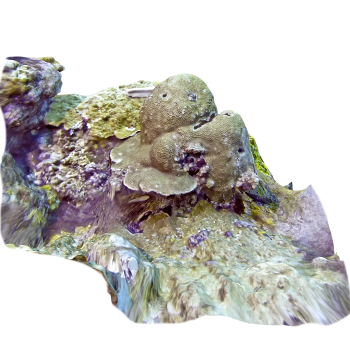
Flat Coral
Flat coral is the "invisible cornerstone" of coral reefs-its dense skeleton, symbiotic relationship with zooxanthellae, and support for biodiversity make it a core species for maintaining reef health. In the face of climate change and man-made air disturbance, protecting this "flat engineer" is essentially injecting resilience into the entire coral reef ecosystem. Every gentle guardian of a coral reef is an investment in the future of the ocean.
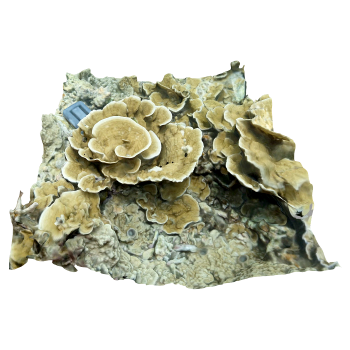
leafy Monterey coral
The leafy Monterey Coral is the elegant "leafy builder" of tropical coral reefs-its flaky skeletons, tiny coral polyps and zooxanthellae symbionts that together form the core framework of the coral reef ecosystem. However, climate change and man-made air disturbances are putting these "seafloor leaves" at risk of disappearing. Protecting foliated Montipora is essentially protecting the health of the entire coral reef ecosystem.

Sallia cono specimen
Conus Sallia (scientific name: Conus lampas sauliae) is a highly toxic marine gastropod mollusk of the conus family Conus. It is classified as a subspecies of the lamp snail, named for its type specimens collected from the Saliya Archipelago in Indonesia. Sallia conus is known for its unique shell shape, bright body color and deadly venom, and is one of the most representative "marine poison kings" in the conus family. It is distributed in the tropical waters of the Indian Ocean-Pacific Ocean, mainly in Indonesia, the Philippines, Malaysia, northern Australia and the west coast of India. Sandy, muddy or coral reef bottoms with a preference for water depths of 1-50 m

Cranus giant specimen
Crocea (Tridacna crocea) is a very distinctive marine shellfish in the bishell class, named after the orange-red markings on the surface of the shells. As a smaller member of the genus, it is still a key species in tropical coral reef ecosystems.

golden cuttlefish specimen
The golden squid is a kind of cephalopod mollusk named because of its golden or orange body color. The scientific name is Sepia esculenta, which belongs to one of the species of economic value in the squid family. Its internal calcareous inner shell, developed water jet propulsion system and unique color change ability. The golden squid is a warm-temperature offshore benthic cephalopod that depends on the complex environment of the shallow sea to complete its life cycle. To be distributed in the Yellow Sea, Bohai Sea, East China Sea (such as Shandong, Liaoning, Fujian coast), as well as Japan's Honda, Kyushu sea. Preference for sandy or muddy seabed with water depth of 20-100 meters (sediment content above 70%).

Skipjack specimen
Bonito (Katsuwonus pelamis) is a large pelagic fish widely distributed in the global tropical-subtropical waters, and belongs to one of the most economically valuable species of tuna. It is named for its dark stripes on the sides of the body ("skipjack" originally means "jumping mackerel") and active cluster habits. Bonito is a typical pelagic migratory fish with a streamlined spindle-shaped body and is adapted to high-speed swimming. The tropical-subtropical waters (40 ° N to 40 ° S) of the three global oceans (Pacific Ocean, Atlantic Ocean, and Indian Ocean) are concentrated on both sides of the equator.

Giant webbed-footed octopus specimen
Giant webbed-footed octopus is a typical cephalopod mollusk. The giant webbed-footed octopus (Callistoctopus macropus) of Octopaceae family has no shell, soft body and highly flexible body. It is a warm benthic cephalopod, widely distributed in tropical-temperate waters of the world, and prefers complex habitat to avoid predators. Mainly preys on crustaceans (crabs, shrimps), mollusks (shellfish, squid) and small fish. It often inhabits coral reef crevices, rock caves, shipwrecks or sandy seabed in shallow seas (water depth 1-100 meters). It is hidden during the day and active at night.

Cretaceous chrysanthemum fossils
The ammonites are an extinct marine mollusk belonging to the cephalopod family. They lived on Earth during the Mesozoic period, about 0.25 billion to 65 million years ago, and were mainly distributed in the oceans. The shape of the ammonite resembles a spiral flat disc, consisting of a series of spiral chambers. Their shells are usually made of calcareous matter and can be preserved as fossils. The size range of ammonites is large, from tiny species with only a few millimeters to giant species with a diameter of more than 2 meters.

green vortex screw shell
The scientific name of the green vortex snail is Turbo viridus, which belongs to the medium-sized marine shellfish of the genus Vortex Snail family. It is named after the green or yellow-green markings on the shell. The spiral part is short (accounting for 1/3 of the total shell length), the body spiral layer (lower part of the shell) is wide and conical, the shell length is 8-20cm, the shell is thick and hard (the main component is calcium carbonate), and the surface is smooth but with fine growth lines; The shell surface is covered with green or yellowish green stripes (some individuals have white or brown stripes), and the overall color is mainly emerald green and olive green.

Oriental Angel Wing Screw Shell
The scientific name of the Oriental Angel Wing Snail is Pterynotus orientalis (Oriental Wing Snail), which belongs to the large marine shellfish of the genus Angel Wing Snail family. It is named after its shell is as wide as wings and has angelic elegant lines. Fan-shaped or wing-shaped, the shell length is 20-40cm (up to 50cm), the shell height is about 1.5 times of the shell length, the shell is thick and hard (the main component is calcium carbonate), and the surface is smooth but with fine growth lines; The shell surface is covered with radial ribs (about 3-5 per cm), with light brown or white spots between the ribs, and the overall color is mainly milky white and light yellow.

Nanyang Baby Screw Shell
Nanyang baby snail scientific name is Cypraea tigris (tiger baby). The deep and shallow tiger-shaped pattern of its shell mask is one of the most representative tropical marine shellfish in the Baby Division. It is named after its widespread distribution in the Nanyang Ocean (Southeast Asia). Tiger-spotted baby is one of the larger and most gorgeous types of shell patterns in the baby family. Oval or pear-shaped, the shell length is 5-15cm, the shell height is about 2/3 of the shell length, the shell is thick and hard (the main component is calcium carbonate), and the surface is smooth but with fine growth lines. The shell surface is covered with tiger spot patterns with alternating shades, and the overall color is mainly golden and orange.

spider screw shell
The spider's scientific name is Lambis chiragra. Its unique shell shape, shell mouth slender curved like spider legs, is the spider snails (Vermetidae) in the highly recognizable tropical marine shellfish. The spiral part is short, the body spiral layer (lower part of the shell) is wide and conical, the shell length is 10-25cm (up to 30, cm) slender and curved, the edge has a fine tooth-like structure (to enhance the tightness of closure), the shell surface extends downward from the top of the shell, such as "spider legs" with dense and thick ribs, dark brown or green spots between the ribs, and the overall color is mainly gray brown and brown, some individuals are light green due to the attachment of algae.

black abalone shell
The scientific name of the black abalone is Haliotis discus hannai, which belongs to the large marine shellfish of the genus Abalone (Haliotis) of the family Abalone (Haliotidae). It is named for its dark (black brown or dark brown) shell and its disc-shaped shape. Black abalone is one of the largest and most unique shell species in the genus Abalone, with 6-8 short antennae, developed into fleshy lumps ("abalone meat"), mucous glands on the surface, covering the shell mouth, and thin tubular protrusions on the edge.

australia angle screw shell
The Australian horn screw is named Turritella australiensis. Its slender shell resembles a horn. It is a large marine shellfish unique to the east coast of Australia. Because it often inhabits shallow rocky areas and has unique shell patterns, it has become a landmark species of local marine ecology. The spiral part is extremely long, the body spiral layer is short and wide, the whole is slender conical or tower-shaped, and the shell length can reach 30-50cm. The shell surface is densely covered with dense longitudinal ribs and fine growth lines, with light brown or white stripes between the ribs, the overall color is mainly milky white and light yellow, and some individuals are light green due to algae attachment.

Salmon Specimen
Pacific salmon is one of the most important groups in the family Salmonidae, including 8 species of large migratory fish widely distributed in the North Pacific Ocean. Because of its delicious meat, high economic value and key ecological role, it is called "the silver gold of the Pacific".

Pacific Salmon Specimen

striped puffer specimen
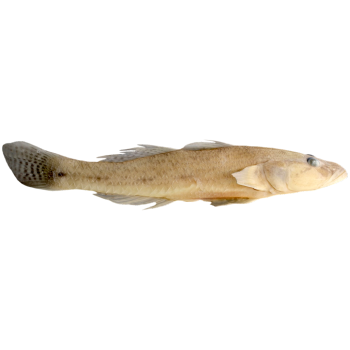
Golden Flat Head Specimen of Goby

Specimen of spotted mullet
Spotted mullet (scientific name: Mugil cephalus) is a broad-salt fish of the genus Mugiidae, named for its obvious spots or stripes on its body side. This species is widely distributed in tropical to temperate waters and estuaries. It is an important economic fish and a typical group for studying the adaptation mechanism of saltine fish. Widely distributed in tropical to temperate waters around the world. Adult fish prefer coastal waters with salinity of 5-35 ‰, and juvenile fish mostly inhabit the semi-salty waters of estuaries or the estuaries of freshwater rivers.

Corner specimens
Horn (Ceratias holboelli) is a deep-sea fish of the family Brectaidae. Because of the female's iconic "luminous fishing rod" and "giant mouth", as well as the extreme parasitic behavior of males, it has become one of the most legendary species in deep-sea ecology. Its unique sexual dimorphism and symbiotic reproduction strategy is a classic case of "extreme adaptation" in marine biology. It is mainly distributed in the deep-sea areas of the North Atlantic, including the Norwegian Sea, the Greenland Sea, around Iceland and off the Nova Scotia Peninsula.

Stone Beauty Specimen
The stone beauty (scientific name: Holacanthus tricolor) is a small marine fish of the order Perciforma (Perciformes) and the finch snapper (Pomacentridae). It is named after the bright blue-yellow boundary color on the body side and the "rock-like" stable posture. Mainly distributed in the tropical coral reef area of the western Atlantic, it is a popular viewing in the global aquarium market. It is mainly distributed in the tropical and subtropical waters of the western Atlantic, including southern Florida, the Gulf of Mexico in the Caribbean and the northeastern coast of Brazil. Fish, but also an important group of coral reef ecology.

Popular Models
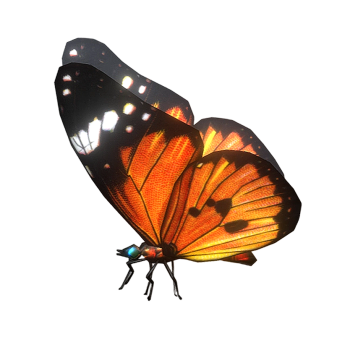
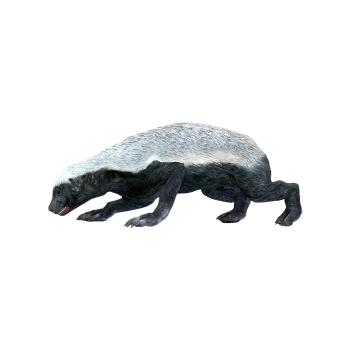
Honey Badger (3D animated model)
194 View
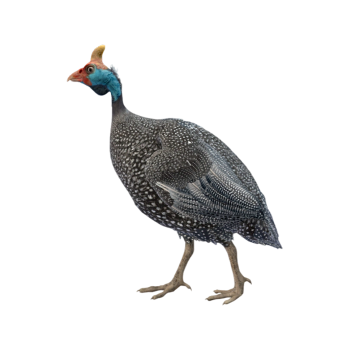
Guinea fowl (3D animated model)
165 View
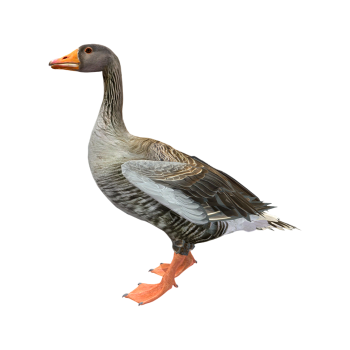
Wild Goose (3D animated model)
187 View
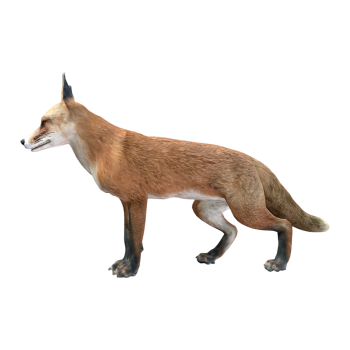
Red Fox (3D animated model)
155 View
Random Model

Vanessa two-seater sofa
497 View

Dinosaur toy allosaurus
700 View

Geological Map of Romania
857 View
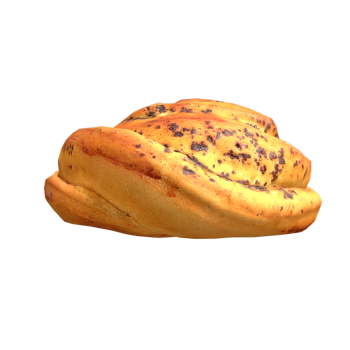
Poppy Seed Bread
453 View
Grilled Sandwich
449 View

Prince of Orange frigate bow image
540 View

traffic cone
388 View

Strawberry French Toast
717 View